Hey everyone, welcome to my recipe site, if you're looking for Majjiga Pulusu or Dahi Kadi recipe, look no further! We provide you only the perfect Majjiga Pulusu or Dahi Kadi recipe here. We also have wide variety of recipes to try.
Before you jump to Majjiga Pulusu or Dahi Kadi recipe, you may want to read this short interesting healthy tips about {Easy Ways to Get Healthy. Becoming A Healthy Eater
Healthy self esteem originates in the environment found in the: family, school, peer group, work area, and community. There are certain aspects of your surroundings that have to be current in order for self respect to be fostered and grow.
The main component of a healthy atmosphere for self respect is that it needs to be nurturing. It should provide incomparable warmth, love, and caring. It has to give the realization that other people are recognized as deserving to be cultivated, reinforced, rewarded, and bonded to.
Healthy environment for self esteem absorbs messages of warmth, loving, and affectionate by physical touch, meeting the survival needs of food, clothing and shelter, and offering a sense of stability and order in life.
A healthy environment for self esteem ought to provide acceptance. It will recognize the other people see each other as worthy people who possess a unique set of personality characteristics, skills, abilities, and competencies making them special. Acceptance empowers people to create relationships with others, nevertheless keep healthy boundaries of identity within themselves.
At the healthy environment for self esteem ought to be good communication, everyone ought to be heard and reacted to in a healthy manner to ensure healthy problem solving can be possible. Appropriate giving and receiving feedback is encouraged and rewarded. Communication at a"feelings" degree is a way of operation for all these people, allowing them to stay in touch with their emotions in a productive manner.
The healthy atmosphere for self esteem must contain appreciation and acceptance of people for who they are. That comprehension and acceptance should not be based on the condition they must first conform to a prescribed standard of behavior or conduct. This can be unhealthy. Unconditional recognition and approval contributed in the form of support allows individuals to attain their greatest potential.
The healthy environment for self esteem should be clearly identified and enforced limits known to individuals without any hidden tricks or manipulation. Restrictions set the structure for the lifestyles of people, allowing transparent benchmarks of appropriate and inappropriate behavior. Limits allow individuals to recognize their responsibilities and also to chart their course of behaviour in a rational way.
Respect and latitude for individual actions within the defined limits of the healthy atmosphere for self regard should be present as well. This encourages people to utilize their imagination, ingenuity, and imagination to become productive within the established structure. Limits that suppress individuality can cause a slow focus, with people becoming stunted and handicapped in the use of their own skills, skills, and tools.
At length, healthy atmosphere for self esteem ought to be bonding, which is the physical/emotional occurrence between individuals and the others in their own environment. This is vital for the growth of healthy self esteem. This includes the significant additional giving unconditional love and assistance as well as developing a psychological link between every other.
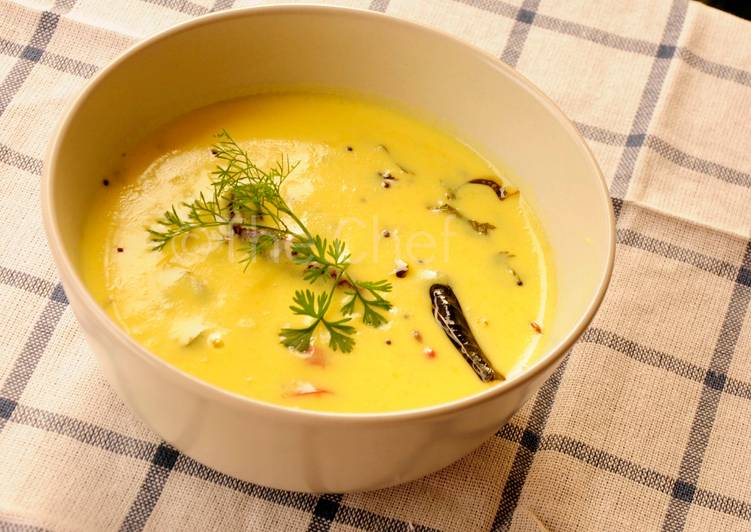
We hope you got benefit from reading it, now let’s go back to majjiga pulusu or dahi kadi recipe. You can cook majjiga pulusu or dahi kadi using 15 ingredients and 11 steps. Here is how you cook it.
The ingredients needed to prepare Majjiga Pulusu or Dahi Kadi:
- You need Mustard Seeds
- Get 1/4 tablespoon Jeera -
- Prepare 2 or 3 Chillies Red -
- Provide Asafoetida - little
- You need 25 - 50 grams Ginger - between
- Prepare 5 Green Chillies -
- Prepare 2 cups Curd -
- You need 2 Tomato - - chopped into small cubes
- Provide 2 Potato - - cut in to small cubes
- Provide 4 Coconut small - - pieces chopped into tiny pieces .
- Get 2 tablespoons Basin -
- Get Oil - as per your tempering usage
- Prepare Coriander Leaves - for garnishing
- Prepare Salt - Swaad anusaar
- Get one small pinch Haldi Turmeric / Powder -
Instructions to make Majjiga Pulusu or Dahi Kadi:
- First make a fine paste of ginger & green chillies.
- Skim the curd and dilute it with water. Add basin, salt and stir it well.
- Add the ginger & green chillies paste to the above diluted curd and mix it well
- Now heat oil in a pan, add mustard seeds, jeera, red chillies and asafoetida.
- Once the tempering is done, add potato and let it cook for a while.
- Once the potato is half cooked, add tomato pieces and close it with a lid and allow it to cook well. Keep mixing once in a while.
- Now, add a pinch of turmeric powder and salt as per your requirement and close the lid. Allow it to cook for a while and keep mixing it in between.
- Now once the potatoes and tomatoes are cooked properly, add the curd mix (please refer point no 2 and 3) and stir it well.
- Add the tiny pieces of coconut if you find it worth and allow it to boil for 5 minutes
- Add red chilli powder if necessary or else add coriander leaves and switch off the gas.
- Your dahi kadi is ready to be served.
It is savored through out South India under various regional names - "Majjige huli" in Karnataka,"Mor Kuzhambu" in Tamilnadu,"Pulissery/Moru kootan" in Kerala and "Majjiga pulusu" in Andhra Pradesh. When mustard seeds start spluttering, add it to the pulusu. Suchen Sie nach South Indian Majjiga Pulusu Rezept in-Stockbildern in HD und Millionen weiteren lizenzfreien Stockfotos, Illustrationen und Vektorgrafiken in der Shutterstock-Kollektion. Jeden Tag werden Tausende neue, hochwertige Bilder hinzugefügt. Majjiga Pulusu recipe is a easy and famous recipe in Andhra Pradesh and even in South.
If you find this Majjiga Pulusu or Dahi Kadi recipe helpful please share it to your close friends or family, thank you and good luck.